
At its June board meeting, the Kansas Board of Regents (KBOR) approved tuition increases at five of Kansas’ six public universities for the 2026-27 academic year, ranging from 3.5% to 6.0%. These approved tuition increases are comparable to those approved by public university systems in nearby states.
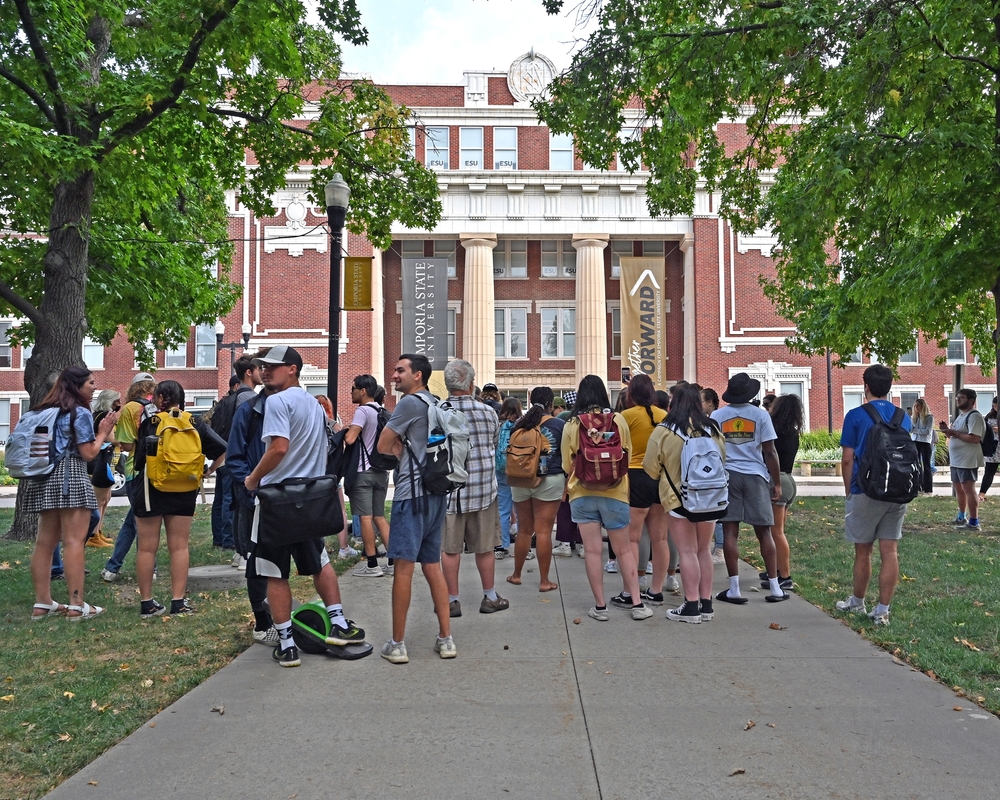
Notably, Emporia State University was the only institution to keep tuition rates flat. While ESU has now kept tuition rates stable for three years running, officials suggested that may not be possible in years ahead:
“The University remains firmly committed to affordability and accessibility, as demonstrated by the request for no tuition for FY 2027. This commitment is especially challenging in the current environment, with enrollment declines and historically high inflation putting significant pressure on the University’s finances.”
In their respective state tuition and fee proposals, university officials from all institutions pointed out that tuition increases are only one component of broader efforts to balance budgets. Institutions have reduced spending, reorganized certain programs, and implemented other cost-saving measures and improvements over the last few years.
Each university indicated in their proposal that tuition increases will not fully close institutional budget gaps. Instead, the universities are attempting to address rising operating costs while remaining competitive on a student-cost basis with peer institutions in nearby states.
The report emphasized repeatedly that inflationary pressure is mounting for institutions, especially for costs related to salaries, benefits, utilities, and technology. In addition, state funding pressures are beginning to emerge. For FY 2027, the Legislature approved a 2.5% reduction to each university’s direct operating appropriation.
| Annual Percentage Change in Resident Undergraduate Tuition1 | ||||||
| KU | KSU | WSU | ESU | PSU | FHSU | |
| FY 2020 | 0.0% | 0.0% | 0.0% | 0.0% | 0.0% | 0.0% |
| FY 2021 | 0.0% | 0.0% | 2.0% | 2.4% | 2.5% | 3.8% |
| FY 2022 | 0.0% | 1.2% | 0.0% | 0.0% | 0.0% | 0.0% |
| FY 2023 | 0.0% | 0.0% | 0.0% | 0.0% | 0.0% | 0.0% |
| FY 2024 | 5.0% | 5.0% | 5.9% | 5.0% | 5.0% | 7.0% |
| FY 2025 | 3.5% | 2.8% | 3.9% | 0.0% | 3.5% | 6.0% |
| FY 2026 | 3.0% | 3.5% | 3.5% | 0.0% | 2.5% | 4.0% |
| FY 2027 | 4.8% | 4.0% | 4.9% | 0.0% | 3.5% | 6.0% |
| Overall change | 16.3% | 16.5% | 20.2% | 7.4% | 17.0% | 26.8% |
Accounting for the approved increases, the following represent semester tuition amounts for full-time undergraduate students:
- University of Kansas: $5,920
- Kansas State University: $5,512
- Wichita State University: $4,087
- Pittsburg State University: $3,363
- Emporia State University: $2,770
- Fort Hays State University: $2,592
Placing this decision in context
The Regents’ decision reflects the difficult position many public universities currently face. Institutions must balance rising costs against pressure to keep college affordable for students and families.
At the same time, enrollment trends vary considerably across campuses, creating different financial realities for each institution. Student enrollment matters because tuition revenue is increasingly important to an institution’s finances. Universities with growing student populations can offset some cost pressures through additional tuition revenue; those experiencing enrollment declines have fewer options.
Kansas is not alone facing these pressures in higher education. Nationally, public universities are encountering rising costs and uncertain enrollment, leading many governing boards to approve tuition increases.
According to the Education Data Initiative, the average cost of tuition at public 4-year universities has increased 3.21% annually since 2023. This year, most of Kansas’ neighboring states have approved similar tuition increases:
- This May, the University of Missouri System just approved a 4% tuition increase for all undergraduate students.
- University of Nebraska regents likewise approved a 4.25% tuition increase at their institutions.
- University of Oklahoma regents recently approved a 3% tuition and fee increase at their campuses.
- The Iowa Board of Regents approved a 3% tuition increase for undergraduate students at the state’s public universities in April.
- System leaders at Colorado State University and the University of Colorado approved tuition rises between 3-3.5%.
It is worth noting that net cost of attendance, or what students actually pay to attend university, has fallen nationwide. Although families and students often focus on the sticker price of attendance, many ultimately pay significantly less after grants and scholarships are taken into account.
While tuition rates may increase, the federal government, states, and institutions themselves have expanded financial aid programs to offset much of those increases. The growth in Pell Grants, state financial aid, and institutional scholarships has reduced the average amount students pay out of pocket — despite published tuition and fee increases.
Consequentially, the national average net cost of attendance at public 4-year institutions has declined significantly and has returned to roughly pre-Great Recession levels after adjusting for inflation.
Ultimately, since grant aid offsets a large share of published tuition increases for many students, changes in sticker price do not always result in equivalent increases in out-of-pocket costs. However, tuition remains an important affordability concern for middle-income families who do not qualify for significant grants or financial aid and bear tuition costs directly. Additionally, financial aid amounts falling or failing to keep up with inflation would similarly increase the cost of attendance.
- Kansas Board of Regents, State University Tuition and Fee Proposals: FY 2027 (May 20, 2026) ↩︎