

This originally appeared in Aligned’s weekly newsletter. Want future updates in your inbox? Sign up today.
Kansas announces new commissioner
On Tuesday, the Kansas State Board of Education selected Dr. Jake Steel to succeed Dr. Randy Watson as the state’s Commissioner of Education. He will assume the role on June 1.
The State Bard voted 7-1 in favor of Dr. Steel.
Dr. Steel is a Kansas public school graduate from Garden City and served in the Kansas State Department of Education most recently as director of strategy and operational alignment. This role saw him focus on questions of statewide strategy specifically related to improving school districts.
According to the official press release, Dr. Steel’s work helped secure $26 million in federal funding for Kansas schools, expand professional development of educators, and lead agency efforts to better align State Board priorities and support for districts.
The announcement also came with Steel discussing his early priorities, which include helping districts effectively use data, provide targeted supports to schools, and ensure alignment across the entire system:
“Our focus is ensuring districts have the tools and support they need to use data in meaningful ways to improve student outcomes[…] By staying focused, aligned and committed to supporting schools, we can build on the progress already underway across Kansas.”
One useful window into Dr. Steel’s approach can be found in his 2023 Harvard dissertation, which looked at how Kansas defines and uses accountability and accreditation through the Kansas Education System of Accreditation (KESA) in practice.
Drawing from his time working at KSDE led Dr. Steel to argue that both agency staff and school district leaders saw the state’s system as too ambiguous and inconsistent. His research identified the following core issues:
- KESA relies on vague ideas of student performance that shifted depending on the context. The state does not have a clear definition of “better results.”
- The system blurred important differences in student status, student improvement, and student growth. This means that leaders do not always distinguish between how students are performing at one moment in time (status), how one year’s cohort compares to another (improvement), and how the same students progress over time (growth).
- KSDE itself lacked consistent alignment internally on how accreditation decisions were made and, in turn, what the system was designed to measure.
To address these problems, Dr. Steel argued for an objective and transparent results-oriented framework. That would entail clearer definitions of student performance, developing a more defensible academic floor for accreditation purposes, and stronger tools to track student learning over time — including a vertically aligned state assessment and student-level growth measures.
He also pointed to an important distinction: while he wanted accountability systems to define what matters and communicate those results, he does not see that as an improvement tool by itself. In his view, real improvement depends on whether the state can connect those signals to meaningful supports and services for districts that need help.
The dissertation is especially relevant now. Kansas is already redesigning its accreditation and accountability systems with the goal of creating a more coherent structure.
Although we cannot say for certain yet, his paper suggests that he may want clearer definitions of student success, stronger growth measures, and tighter alignment within KSDE on these questions of accountability, accreditation, and state support for school improvement.
Aligned’s take: Congratulations to Dr. Steel on his selection as Kansas Commissioner of Education! His focus on using data, improving alignment across the system, and paying close attention to what works for students is encouraging — and closely tracks our own priorities. We look forward to seeing how that vision is carried out in practice.

Missouri news
Missouri State Board reviews new strategic plan
The Missouri State Board of Education used part of its April meeting to review the Missouri Department of Elementary and Secondary Education’s (DESE) revised strategic plan, giving members an early chance to weigh in on the department’s updated direction.
DESE said the plan draws on internal review, 10 working groups, and stakeholder feedback, with respondents pointing to educator recruitment and retention, K-12 literacy, and success-ready students as top priorities.
Commissioner Dr. Karla Eslinger framed the plan around a simple vision: students should enter kindergarten ready, meet grade-level expectations, and leave high school prepared for what comes next.
What the plan looks like now
That vision now takes shape through six major priorities.
The first, strengthening academic foundations with great teaching, focuses on teacher recruitment and development, broader use of high-quality instructional materials in English language arts and math, expanded use of literacy screeners, and a Missouri literacy coaching model.
- DESE says it will measure progress through stronger third grade proficiency, more districts using high quality instructional materials, more educators trained, and better early-career teacher retention.
The second priority, focusing support for underperforming schools and districts, includes clearer public reporting on MAP and Success Ready assessments, targeted support based on accountability data, a district playbook for schools with the highest needs, and streamlined grant management.
- The outcomes here center on stronger proficiency, more annual improvement in supported districts, and more schools where students are meeting growth targets.
Third, a kindergarten readiness priority aims to expand access to early learning, improve quality across providers, and publish better early childhood data.
- The department says success would mean more eligible children enrolled in early learning programs, stronger participation in the state quality system, better access to useful early childhood data, and more children entering school ready to learn.
The fourth priority, preparing students for postsecondary success, points to work-based learning, employer engagement, stronger career pathways and advising, and a statewide push to promote career and technical education.
- DESE’s outcomes here are straightforward: more students participating in recognized work-based learning and more students completing career-aligned pathways.
The fifth priority focuses on data systems and decision-making. DESE wants to modernize its IT infrastructure and make performance data more accessible and useful to educators, families, and policymakers.
- Progress would be measured by increased use of DESE data tools and greater use of real-time assessment data.
Finally, the plan’s sixth priority centers on attendance and safe, healthy schools.
- That includes helping districts implement SB 68 and the Safe Schools Act, improving attendance resources, strengthening communication between families and schools, and improving DESE’s own communication with the field.
Ultimately, the Board will review and approve the final strategic plan at its upcoming May meeting.
New resource: Where Missouri’s teacher workforce is breaking down
Aligned has released Part 2 of its Missouri Teacher Workforce Series, building on last week’s analysis of statewide workforce trends.
While Part 1 showed the emergence of a “missing middle,” this report examines where those losses are most concentrated across grades and subjects.
The findings point to specific pressure points:
- Sharp declines in mid-career teachers in transition grades (3–6).
- Growing instability in early literacy classrooms.
- A split between subjects being “hollowed out” (ELA and social studies) and those nearing a retirement cliff (math and science).
Check out the latest report now!

Kansas news
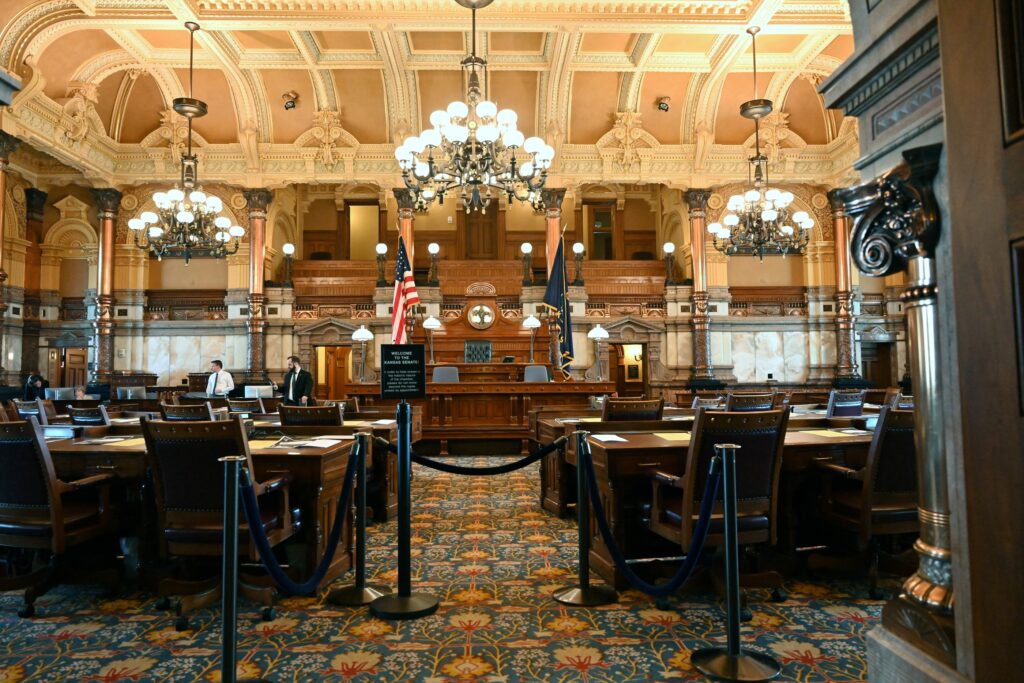
Kansas lawmakers finally adjourned the 2026 legislative session last Saturday, but not before enacting two more Aligned priority bills into law. At the time of this newsletter’s release, both were yet to be engrossed and signed by Governor Laura Kelly.
Kansas expands child care tax credit
Recent federal tax law changes created an opening for states to strengthen their own employer-provided child care incentives.
Kansas moved to do exactly that this session by passing SB 82 (76-45 in the House, 36-2 in the Senate).
Under this bill, employers can claim a nonrefundable tax credit equal to 75% of expenses related to the following:
- Direct payments for employees’ child care.
- Establishing or expanding a child care program used primarily by employees.
- Paying for referral services that connect employees to child care providers.
- Collaborative child care investments with other employers.
The legislation also creates a separate tax credit for employer contributions to third parties who expand community child care availability, with more generous credit amounts if recipients serve families receiving child care subsidies.
Supporters successfully argued the previous version of the credit was too limited to meaningfully incentivize businesses to invest in child care services. The two tax credits will share a combined increased annual cap of $100,000 per taxpayer, replacing the lower, fragmented limits of the previous credit.
Although these are nonrefundable tax credits, the bill allows taxpayers to carry tax credit amounts forward for up to three years.
The aggregate amount of credits the state may allocate annually remains $3 million.
Aligned’s take: We supported this effort to encourage employers to help their employees access and afford quality child care services. Changes to both federal and state tax law now make these types of investments far more attractive. We hope this expansion makes employers more likely to help their employees access care they need to work.
New law requires minimum recess time, physical fitness test
The Kansas legislature also passed HB 2763 on Friday night 74-47 in the House and 29-10 in the Senate. The bill establishes minimum recess requirements for schools and directs the State Board of Education to create the Kansas state physical fitness test.
Beginning in the 2027-2028 school year, school districts are required to provide a minimum of 30 minutes of recess for K-5 students.
Schools are now prohibited from withholding a student’s access to recess for disciplinary reasons, with an exception granted in the case of a student being a threat to themselves or others.
The bill also makes technical changes to the statutorily defined school year.
- One hour of recess per school day can count towards the regular school instructional hours requirements (186 day school days or 1,116 school hours annually).
- Previous state law only considered up to 30 minutes of recess as a part of the school day.
The bill rides a wave of widespread concern arguing against districts that reduce recess time to accommodate busy school schedules or withholding it for behavioral reasons.
Not only can recess be beneficial to students academic and classroom behavior, the link to student’s physical health has increasingly come into focus. For instance, the American Academy of Pediatrics calls for a total of 60 minutes of moderate to vigorous activity per day for elementary school-aged children to help lower the risk of obesity.
Which is where the other aspect of the bill comes in.
Beginning in the 2026-2027 school year, school districts will administer the Kansas state physical fitness test aligned with the presidential physical fitness test to students in grades 1-12.
The State Board is charged with developing updating the test to maintain alignment. Districts will provide awards to students who meet or exceed the 50th and 85th percentiles in one or more tested events.
Students with disabilities or those excused by a medical exemption are not required to take the test.
Overall, the bill reflects a broader push to treat recess as a protected part of the school day and more emphasis on student physical wellbeing, which also positively impacts students’ mental wellbeing.
Save your spot for Aligned’s post-session webinar
Aligned will host a virtual post-session briefing on May 6 from 12 to 1 p.m. focused on what happened during the 2026 Kansas legislative session and what it means moving forward.
We will cover the major proposals that advanced, the measures that stalled, and the broader themes that shaped debate this year. If you want a practical rundown of where things landed and what to watch next, be sure to register!
Be on the lookout: We will host a similar session in May to cover the Missouri session.